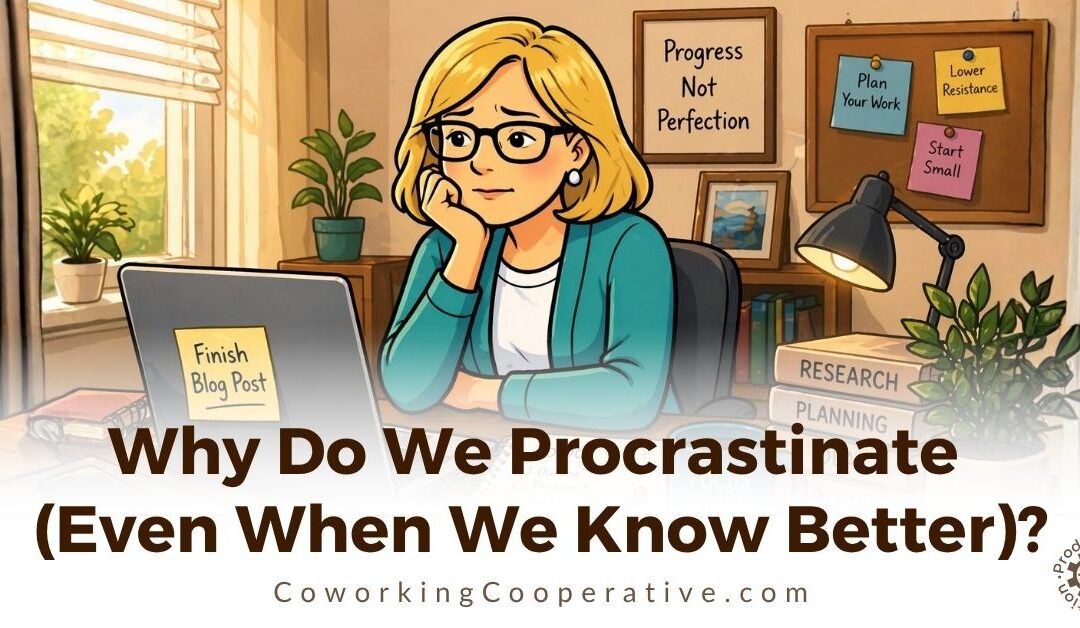
If procrastination isn’t laziness, what’s actually going on, and how do you fix it?
TLDR
- Procrastination is emotional avoidance, not poor time management
- It works because it gives short-term relief, which becomes addictive
- Your brain delays tasks when the emotional cost feels higher than the reward
- Starting is the hardest part. Resistance drops after you begin
- The solution isn’t discipline. It’s making the task feel safer to start
You’re not procrastinating because you’re lazy. You’re procrastinating because something about the task feels bad and your brain is trying to protect you from that feeling.
That might sound simple, but it changes everything. Because if procrastination is emotional and not logical, then no amount of better planning, stricter schedules, or guilt is going to fix it.
The real problem isn’t that you don’t want to do the work. It’s that you don’t want to feel what the work requires you to feel.
And once you see that clearly, the solution stops being force . . . and starts becoming design.
The Real Problem (That Most People Miss)
We’ve been taught that procrastination is a discipline issue. So we try to fix it with pressure.
“Just focus.”
“Just start.”
“Stop being lazy.”
But here’s what research has shown for years: procrastination is more closely tied to emotional regulation than time management.
When a task makes you feel:
- anxious
- uncertain
- overwhelmed
- bored
Your brain looks for an exit. And procrastination becomes that exit. Not because you’re weak, but because you’re human.
The Trap: Why It Keeps Happening
Here’s the part that makes procrastination so sticky.
It works.
You avoid the task . . . and instantly feel a little better. That relief might be small, but it’s enough. Your brain logs it as a win:
“Avoid task → feel better → repeat later”
Over time, this becomes a loop.
𝔖𝔥𝔬𝔯𝔱-𝔱𝔢𝔯𝔪 𝔯𝔢𝔩𝔦𝔢𝔣 → 𝔩𝔬𝔫𝔤-𝔱𝔢𝔯𝔪 𝔰𝔱𝔯𝔢𝔰𝔰
The task doesn’t disappear. It just gets heavier.
And now you’re not only avoiding the work, you’re also carrying guilt about avoiding it.
The Invisible Calculation in Your Head
Every time you face a task, your brain runs a quiet equation:
How bad will this feel? vs. How good will the outcome be?
If the emotional cost feels too high, or the reward feels too far away, you delay. This is why you can:
- scroll for 45 minutes without thinking
- but avoid a 10-minute task all day
It’s not about effort. It’s about perceived emotional weight.
Why Modern Life Makes This Worse
We’re living in an environment perfectly designed for avoidance:
Endless scrolling.
Instant entertainment.
Constant notifications.
These aren’t neutral. They train your brain to prefer:
- quick dopamine
- low effort
- immediate reward
Which makes slow, uncertain, meaningful work feel even heavier by comparison.
So it’s not just you. It’s the system you’re operating inside.
The Sneaky Version: “Productive” Procrastination
This is where it gets subtle. Because it’s not like you are watching Netflix. It’s not like you aren’t doing “work”.
You’re:
- researching tools
- planning your approach
- starting another important project
It feels productive. But if you’re avoiding the thing that actually moves the work forward . . .
It’s still procrastination.
Just dressed up better.
The Turning Point: Starting Changes Everything
Here’s something most people don’t realize:
The hardest part of any task is starting it. Not doing it.
And I don’t mean starting a new project. That is always fun and exciting.
I mean starting the next meaningful segment of an “old” project, one where you’ve already got the dopamine hit of working it out, getting it to work (at least partly).
But when getting started on the next phase of a no-longer shiny object (the project you need to work on), your brain overestimates how bad it will feel. It may overestimate how long it will take (how often have you put off a task for days, weeks or even months, that ends up taking only a few minutes?).
But once you begin, something shifts.
The uncertainty drops. The resistance softens. The task becomes . . . normal.
Experience corrects the fear.
This is why people often say:
“I don’t know why I avoided this for so long.”
What Actually Works (And Why)
If procrastination is emotional, then the solution is too.
Not more pressure.
Not more discipline.
But less resistance.
Here’s what that looks like in practice:
Practical: Make Starting Easier (Not Harder)
1. Shrink the entry point
Don’t “work on the project.”
Open the file. Write one sentence.
2. Define what “done” means
Ambiguity creates resistance.
Clarity lowers it.
3. Lower the quality bar (on purpose)
Perfection creates emotional pressure.
Bad first drafts create momentum.
4. Design your environment
Remove distractions before you need willpower.
Add structure where possible.
5. Focus only on starting
Not finishing. Not optimizing.
Just beginning.
The Unexpected Lever: Self-Compassion
This one feels counterintuitive.
But being harsh on yourself doesn’t reduce procrastination. It increases it.
Because now the task carries even more emotional weight:
- fear of failure
- fear of judgment
- pressure to perform
Self-compassion does the opposite.
Self-compassion makes the task feel safer. And safe tasks get started.
Key Takeaways
- Procrastination is about avoiding feelings, not avoiding work
- It persists because it gives temporary emotional relief
- Your brain delays tasks when they feel too heavy emotionally
- Starting reduces resistance faster than thinking about starting
- The real solution is lowering friction, not increasing force
FAQ
Why do I procrastinate even when I care about the task?
Because caring often increases pressure. The more it matters, the more emotional weight it carries and the more likely you are to avoid it.
Why does starting feel so disproportionately hard?
Because your brain is predicting discomfort without evidence. Once you start, reality usually feels easier than the expectation.
Is procrastination a habit or a feeling?
It starts as a response to emotion, but becomes a habit through repeated relief cycles.
How do I stop “productive procrastination”?
Ask one question: Is this directly moving the outcome forward?
If not, it’s likely avoidance in disguise.
What’s the fastest way to break the cycle?
Make the task so small it feels almost pointless and start anyway. Momentum does the rest.
The Shift
You don’t need more discipline. You need less resistance.
Because the moment a task feels lighter, even slightly, you stop fighting it . . . and start moving.
And that’s the shift most people never make.
